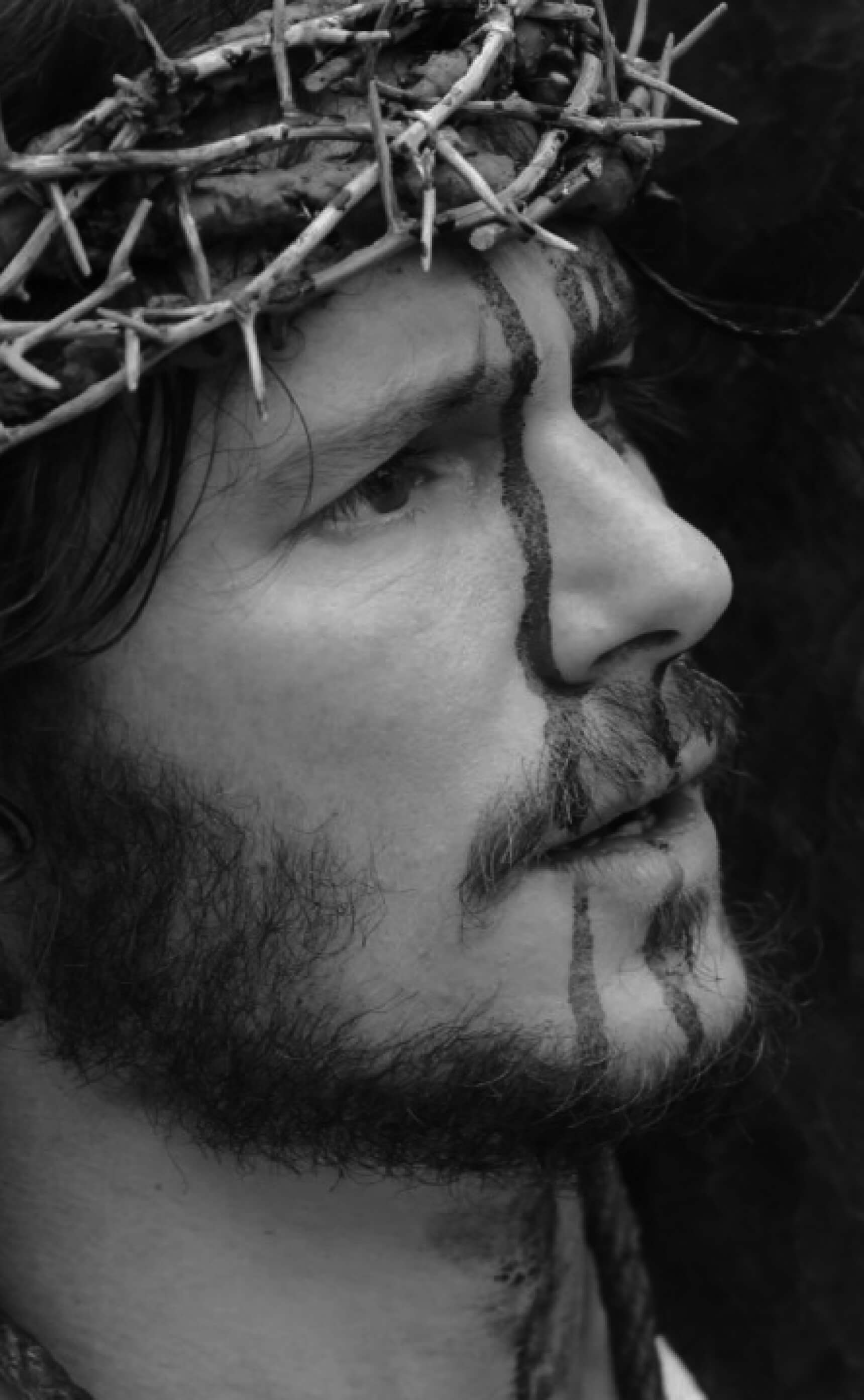
Balmaseda, primera Villa de Bizkaia y fundada en 1199, es una Villa celosa de sus tradiciones y así lo demuestra el cariño con que celebra su Pasión Viviente
Somos un pueblo que ha heredado de sus mayores, la responsabilidad de hacer sentir a los demás las últimas horas de la vida de Jesús.
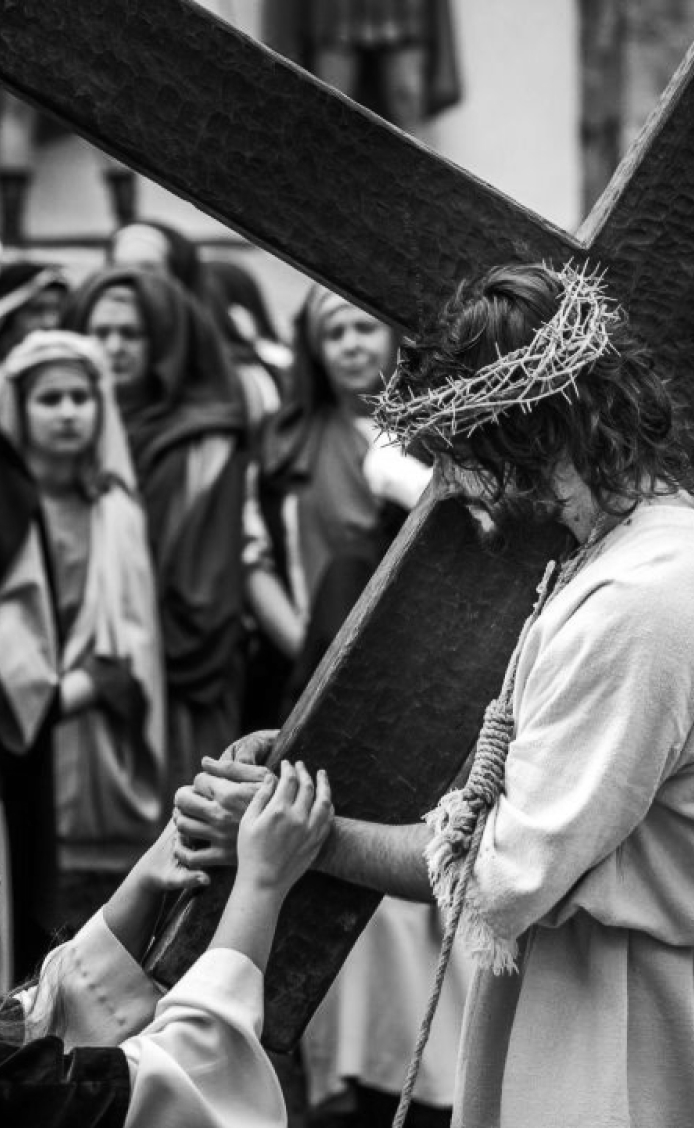
La actividad principal se centra en el Jueves Santo por la noche y el Viernes Santo por la mañana, durante los cuales se desarrolla la representación de los últimos momentos de la vida de Jesús de Nazareth. Representación viviente que transcurre por las calles y plazas de la Villa.
La Pasión se representa de forma viva desde finales del siglo XIX y ha ido evolucionando a lo largo del tiempo incorporando diferentes personajes y escenarios, alcanzando así el realismo y la emotividad que la caracteriza.
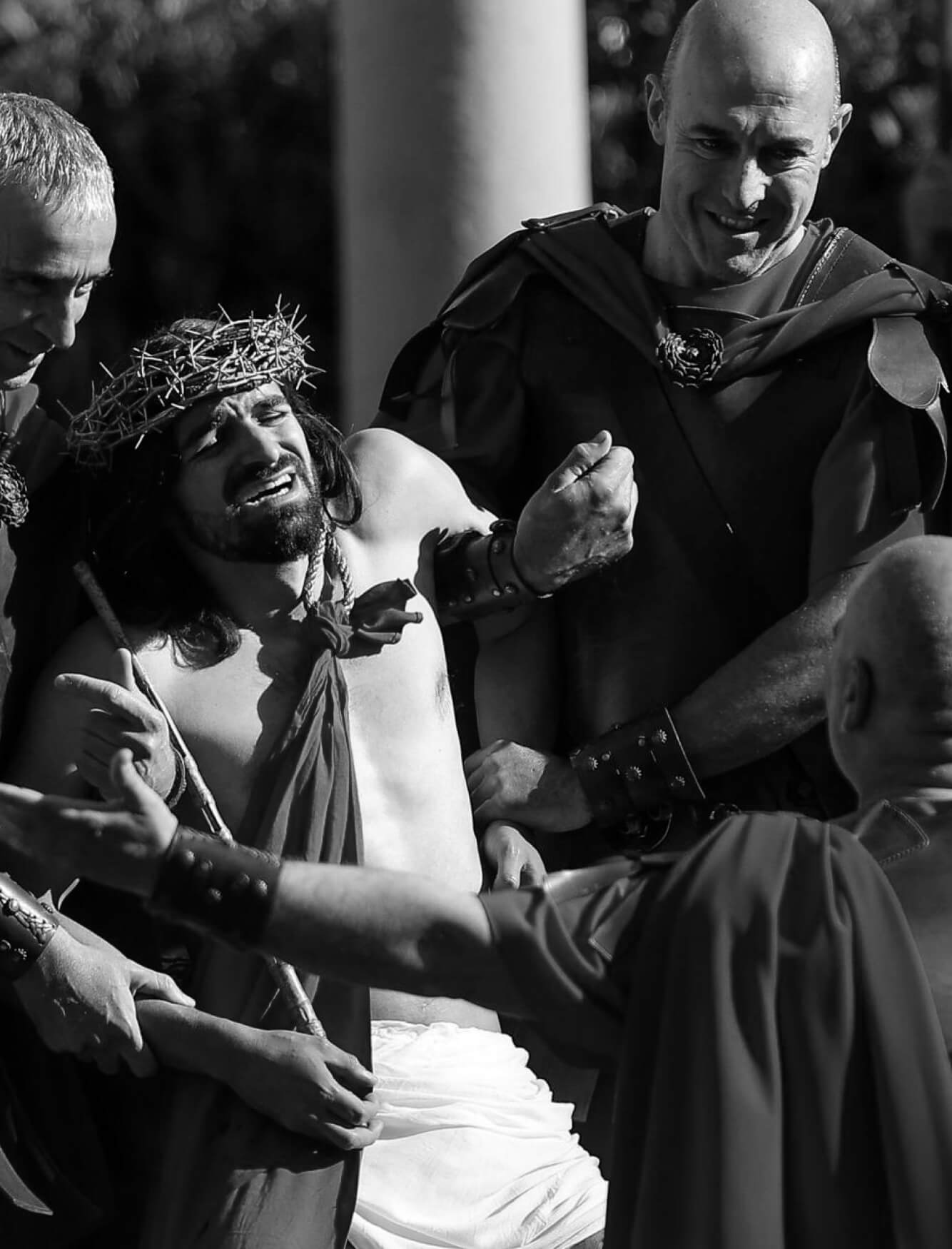
La Pasión se representa de forma viva desde finales del siglo XIX y ha ido evolucionando a lo largo del tiempo incorporando diferentes personajes y escenarios, alcanzando así el realismo y la emotividad que la caracteriza.




Desde 1974
Eventos
Cabe destacar que en un principio se trataba de una procesión penitencial por las pestes, acompañada de pasos, a la que escoltaba la guardia romana con los principales personajes del Vía Crucis, pero la incorporación de nuevos personajes y escenarios la ha llevado a convertirse en lo que es actualmente.
Las citadas procesiones de pasos, han llegado hasta nuestros días, y alguno de sus pasos datan del siglo XIX; acompañadas por la Guardia Romana, los Penitentes, la Coral Kolitza y la Banda de Música, realizan su recorrido por el casco histórico de la Villa el Jueves Santo y Viernes Santo por la tarde, finalizando el viernes por la noche con la popular ”Procesión del Silencio”.
Colaboran